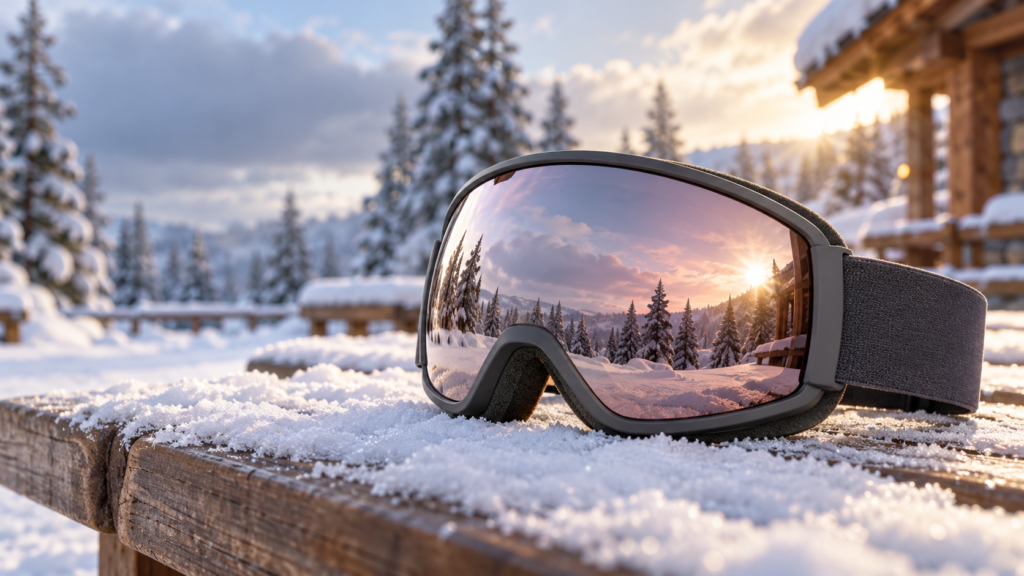
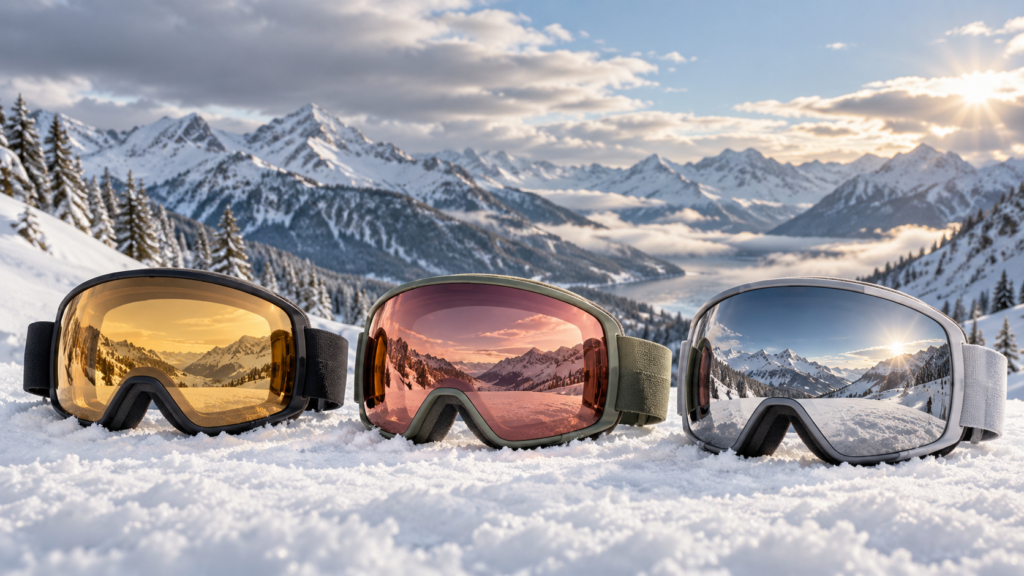
These terms describe the shape of a goggle lens. A cylindrical lens curves from side to side, around your face, but is flat from top to bottom. A spherical lens curves in both directions, like a slice of a ball, roughly following the shape of the eye.
What difference it makes
A spherical lens generally gives a wider field of view, particularly up and down, and less distortion towards the edges, because your eye looks through it at a more even angle. The extra volume inside the goggle also helps air circulate, which can reduce fogging.
Cylindrical lenses are flatter and lower-profile, which some people prefer for looks and for fit with certain helmets. They are often cheaper, and good ones are perfectly clear in the middle where you do most of your looking.
Toric and other shapes
A toric lens sits between the two: curved in both directions, but more gently from top to bottom than a full spherical lens. Makers sometimes use their own names for these shapes, so read the description rather than the brand name.
Does it matter for you?
For a week’s holiday skiing, the fit around your face and with your helmet matters more than lens shape, along with the right lens category. Shape becomes more noticeable for people who ski fast, ski a lot in trees or flat light, or simply notice edge distortion. If you can, try both on and look around at the edges of your vision.